
SLIME-ISEKAI Memories:TenSura
Bandai Namco Entertainment Inc.Role Playing
4.58.13K Reviews
- Version
- 4.0.60
- Installs
- 1.00M
- Age Rating
- Teen
Screenshots

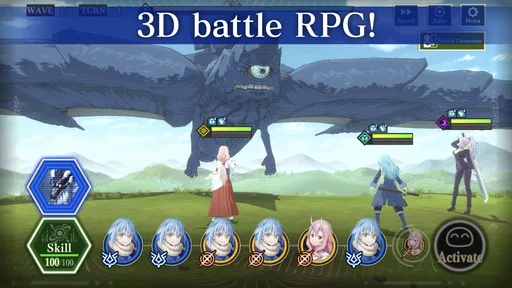
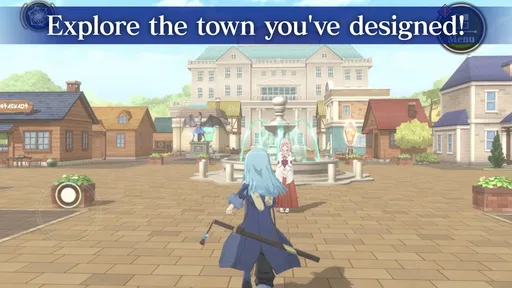
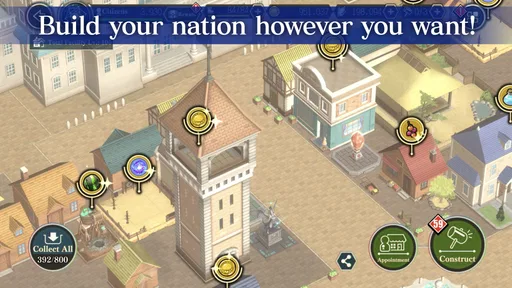
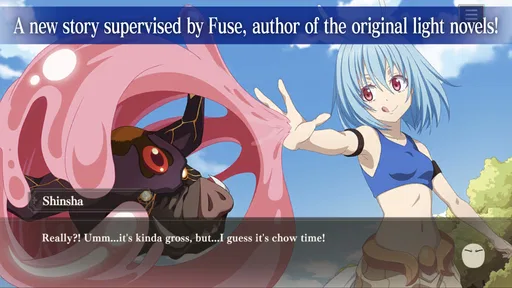
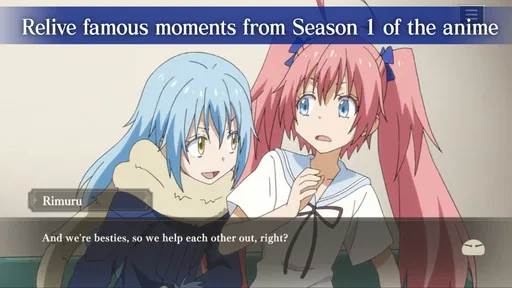
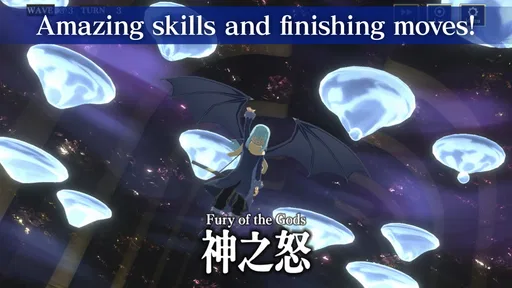
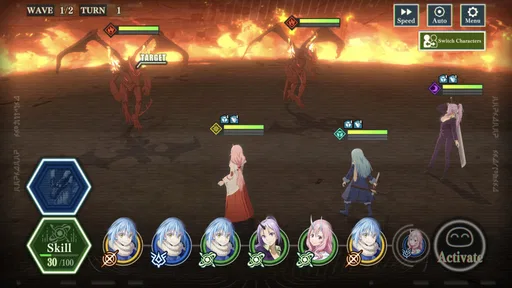
Our Review of SLIME-ISEKAI Memories:TenSura
 Analysis by Appyee
I spent time with SLIME-ISEKAI Memories as a role-playing game that works best when I can give it focused attention rather than treat it as a quick distraction. It combines character collection, story-driven battles, and the familiar world of Reincarnated as a Slime, but its appeal is not limited to recognizing the anime setting. I found the most interesting part in the way battles, town development, team building, and resource choices connect. A decision made outside combat can affect how prepared I feel when the next difficult encounter arrives.
That makes it a particularly interesting choice for a shared household device. Someone else can pick up the phone for a short session, but the game still feels personal because progress, recruited characters, and spending decisions belong to one player’s account. I would not hand it over casually without explaining those boundaries first. The game is free to start, rated Teen, and includes random-item purchases, so the household conversation matters almost as much as the combat system.
How the game fits into everyday play
The first thing I noticed is that this is not simply an action game with a Slime skin. It is a mobile role-playing experience built around planning a party, improving characters, following a continuing narrative, and developing the setting around you. The story gives the battles a reason to exist, while the management elements give me something to do between major fights. That combination helped the game feel more substantial than a sequence of disconnected stages.
In a realistic everyday situation, I could play through a story segment during a quiet commute, stop before starting a longer battle, and return later to improve a team or collect rewards. On a shared tablet, another person could watch the story or try a battle, but I would keep the main account under one clearly agreed-upon user. Switching players without a plan can make it difficult to remember which resources were meant for which character, especially when several people are interested in the same fictional world.
The game comes from Bandai Namco Entertainment Inc., and that background is visible in the presentation and in the effort to build a dedicated version of the Slime universe. I enjoyed seeing the setting treated as more than a backdrop. The experience is aimed at fans who want to spend time with the world, not only at players looking for a generic turn-based role-playing game with familiar artwork.
At the same time, the anime connection will not automatically make every part enjoyable. If you prefer a self-contained role-playing game with a fixed party and a clearly finished campaign, the collection structure may feel distracting. I often had to think about long-term improvement instead of simply asking which move would win the current fight. That is rewarding when I am in the mood for planning, but it adds mental overhead to what might otherwise be a simple mobile session.
What makes the shared-device scenario work
I think the safest arrangement is to treat the game as belonging to one primary player, even if the device belongs to the household. A child, sibling, or partner can watch, discuss team choices, or play only when the owner is present. This avoids accidental changes to a carefully prepared party and makes it easier to notice when an in-game purchase is being considered.
There is also a practical reason to avoid casual account handoffs: role-playing games with collectible characters encourage players to make decisions over time. A second person may spend materials on a character they like immediately, while the primary player was saving those materials for a different upgrade. Neither choice is necessarily wrong, but the disagreement can be frustrating when both people assume they are making temporary changes.
For a family that wants a game everyone can enjoy together, I would use it as a discussion game rather than a communal save file. One person can choose the next story step, another can suggest a battle formation, and everyone can agree before resources are used. That turns the game into a small shared activity without pretending that one progress path can satisfy different players equally.
The best household rule is simple: decide who owns the progress before anyone starts playing. That rule is more useful here than a vague instruction to “be careful,” because it covers both gameplay decisions and purchases. I would also avoid leaving the device unlocked around younger players if payment information is available elsewhere on the device.
Setup boundaries before the first battle
Because the game is free to download and play, it is easy to begin with the assumption that there is no financial commitment. That assumption needs adjusting. In-app purchases range from $0.99 to $79.99 per item, and the random-item purchase element means the value of a purchase is not always as predictable as buying a specific cosmetic or fixed expansion. I would explain that clearly before letting another person use the account.
For my own setup, I would separate three decisions: who plays, who can approve spending, and who is allowed to change the team. Those boundaries do not require complicated household rules. A quick conversation is enough for adults, while a younger player should have a clear agreement that any purchase or major resource use requires permission first.
The Teen content rating is also relevant. I would not interpret it as a guarantee that every household will have the same comfort level with the game’s themes, character designs, or random-item mechanics. Instead, I would look at the game together before deciding whether it fits a particular player. A teenager who already understands collectible systems may approach it differently from a younger child who mainly wants to interact with favorite characters.
The game requires Android 8.0 or later, so compatibility is not something I would leave until after a long download. On an older household phone, I would check the operating system first and make sure there is enough practical room for the game and its updates. I would also start it on the device that will be used most often, rather than building progress on a temporary phone and assuming the move to another device will be effortless.
One useful habit is to decide in advance what counts as a successful session. For me, that might mean completing a story scene, improving one character, or simply checking available rewards without spending them. This prevents the collection loop from turning every short visit into an invitation to make an impulsive decision. It also gives a shared-device user a natural stopping point.
Coordinating teams, time, and resources
The strategic layer becomes more manageable when I separate immediate needs from long-term goals. If a battle is blocking progress, I focus on the characters and improvements that solve that problem. If I am only collecting materials, I resist changing the entire team just because a new character looks appealing. That distinction saves resources and keeps the account from becoming a pile of half-developed options.
A non-obvious advantage of this approach is that it makes the game easier to coordinate with another player. Instead of arguing over which character is “best,” we can agree on a job for the current team: clear the next story fight, test a new formation, or prepare for a harder challenge. The conversation becomes about the account’s current purpose rather than personal preference alone.
I also found it helpful to keep a mental note of which characters are already serving a reliable role. Collection games can make new arrivals feel urgent, but replacing a familiar team member too quickly may leave the whole party underdeveloped. The more characters I tried to improve at once, the less satisfying each individual upgrade became. Concentrating effort gave me clearer progress.
For someone sharing a device with a partner, a short verbal handoff works well: mention what stage is next, which materials are being saved, and whether any rewards should remain unclaimed. It sounds overly formal for a game, but it takes less time than repairing an accidental change. On a family tablet, I would even keep a simple note outside the game with the current plan, without recording payment details or private account information.
Time is another coordination issue. The game can fit into brief sessions, but the broader role-playing loop encourages return visits. I would not promise a child that it is “just a five-minute game” if the real intention is to complete story content or manage a growing roster. A better arrangement is to set a stopping point before opening it, especially on school nights or when several people share the same device.
Compared with a conventional single-player role-playing game, this structure offers more reasons to return but less certainty that every minute moves the story forward. Compared with a purely competitive mobile game, it can feel more personal and less dependent on matching against other people, yet the random-item purchase system still adds a layer of pressure that some players will dislike. I prefer it to a reflex-heavy alternative when I want planning, but I would choose a premium, fixed-content game when I want a clean beginning and end.
Age, trust, and the random-item question
The random-item purchase system is the point I would discuss most carefully with a teenager. The issue is not only the possibility of spending money. It is also the habit of treating a chance-based reward as the answer whenever progress feels slow or a favorite character is unavailable. That can change the mood of the game from thoughtful team building to repeated attempts to get a desired result.
I would encourage a player to decide on a limit before touching the purchase screen, preferably with the person responsible for the device account. If the player cannot comfortably enjoy the game without buying chances, I would consider that a sign to stop rather than a reason to spend more. The free entry point is useful, but it should not be confused with a promise that every part of the experience will remain equally comfortable without purchases.
Trust also matters between adults. A partner using the same phone may be completely reliable and still make a purchase accidentally if the device is configured for fast payments. I would keep purchase approval with the account owner and make that arrangement explicit. The game itself should not become a test of whether someone noticed a button quickly enough.
For younger household members, I would focus on whether they can follow the spending rule and understand that a random result is not guaranteed. The Teen rating means I would make an individual judgment rather than assume the game is suitable for every child who enjoys the source material. Watching a session together is a practical way to see whether the tone and mechanics feel appropriate.
There is a positive side to this conversation. The game can teach useful habits about prioritizing limited resources, comparing short-term excitement with long-term value, and accepting that a desired outcome may not arrive immediately. Those lessons only appear if the adult treats the purchase system as something to discuss, not something to hide or ignore.
Where the latest version fits
I played with the current version listed as 4.0.60, and I would keep the installed version current when possible. A live mobile role-playing game can change its balance, available content, and daily rhythm over time, so a household should expect the experience to develop instead of remaining exactly as it felt on the first day. That is part of the attraction for returning players, but it can also make the game feel less predictable than a finished offline title.
The release history places it on mobile since October 27, 2021, which helps explain why the game has had time to build a substantial player base. It has passed one million installs, holds a 4.5 average from roughly 174 thousand ratings, and has about 8.1 thousand written reviews. I read those figures as evidence of strong interest, not as a guarantee that every player will enjoy the collection mechanics. Popularity cannot remove the need to check whether the game’s rhythm suits you.
For a new player, I would avoid trying to understand the entire system in one sitting. Start with the story, learn what each battle asks you to do, and only then begin making broader investment decisions. The game becomes less confusing when I let its systems appear gradually instead of treating every menu as something that must be optimized immediately.
Another useful approach is to keep the first account as a learning account. I would not spend heavily or rebuild everything around an early favorite until I understood how the game handles progression. This is especially important on a shared device, where another person may be watching and forming expectations based on the first few choices. Slow early decisions are easier to explain and easier to recover from than rushed ones.
Who should play it, and who should skip it
I would recommend SLIME-ISEKAI Memories to fans of Reincarnated as a Slime who want an interactive way to spend more time in that universe. It also suits role-playing players who enjoy assembling teams, improving several characters, and balancing story progress against preparation. The town and management side gives the experience a sense of ownership that a straightforward battle-only game would not provide.
It is a good fit for someone who likes returning to the same account regularly and making gradual progress. I enjoyed it most when I had a small plan for the session instead of opening it with no idea what I wanted to accomplish. That planning mindset turns the many available activities into a useful menu rather than a wall of distractions.
I would skip it if you dislike chance-based character acquisition or feel uncomfortable with games that place purchase options near collectible goals. A traditional role-playing game with a fixed cast will be better for players who want to know exactly which heroes they can obtain and how much the complete experience will cost. I would also point competitive players elsewhere if their main goal is direct player-versus-player intensity rather than story and account development.
It may not be ideal for a household seeking a truly shared game. The story can be discussed together, but the account itself is better treated as one person’s responsibility. If several family members all want independent progress, separate accounts or separate devices would be more sensible than passing one save around and hoping everyone remembers the plan.
My household verdict
After spending time with it, I see SLIME-ISEKAI Memories as a thoughtful mobile role-playing game with a strong appeal for anime fans and patient team builders. Its best moments come from connecting the story, character development, and preparation into one ongoing routine. I liked having reasons to return that were not limited to fighting the next opponent.
My main reservation is the tension between free access and random-item purchases. That does not make the game automatically unsuitable, but it does mean that I would establish spending boundaries before sharing it with anyone else. The Teen rating reinforces the need for an age-aware conversation, particularly when a younger player is using an adult’s device or payment setup.
In a household, I would give the account to one primary player, invite others to help with decisions, and keep purchases under explicit approval. That arrangement preserves the enjoyable social side without creating confusion over progress. It also makes the game easier to evaluate honestly: if the story, team building, and Slime setting are enough to keep you interested, the free starting point is worthwhile; if the collection loop feels like pressure, a fixed-content role-playing alternative will serve you better.
My final recommendation is therefore conditional but positive. Try it if you want a character-focused adventure that rewards regular attention and you are comfortable managing chance-based acquisitions responsibly. Skip it if you want a one-time purchase, a completely predictable roster, or a game that several people can freely share without account boundaries. For the right player, it is a substantial Slime-themed RPG rather than a disposable tie-in, and that is why I would recommend giving it a careful, clearly bounded try.
Verdict
Strengths of SLIME-ISEKAI Memories:TenSura
- Faithful characters and story elements appeal to That Time I Got Reincarnated as a Slime fans.
- Strategic team-building makes elemental roles and positioning important in battles.
- Base development adds useful progression beyond the main combat stages.
- Regular events provide extra rewards, limited content, and reasons to return.
- The colorful 3D presentation looks polished on modern Android and iOS devices.
Limitations of SLIME-ISEKAI Memories:TenSura
- The gacha system can make acquiring top characters difficult without spending.
- Later stages may require heavy grinding to improve characters and equipment.
- Large updates can consume considerable storage space and mobile data.
- Combat may feel repetitive once the initial story and mechanics become familiar.
- Some features and rewards are locked behind account progression or time limits.
Other Releases by Bandai Namco Entertainment Inc.
View All
ONE PIECE Bounty Rush
Action4.3

DRAGON BALL LEGENDS
Action4.4

DRAGON BALL Z DOKKAN BATTLE
Action4.6

ONE PIECE TREASURE CRUISE-RPG
Role Playing4.5
Similar Picks in This Category
View All
Hair Dye
CrazyLabs LTD4.4

Monster High™ Beauty Salon
CrazyLabs LTD4.5

Bus Simulator - Bus Games 3D
Jima Apps4.4

Flight Pilot: 3D Simulator
Wildlife Studios4.1


Super Stylist Fashion Makeover
CrazyLabs LTD4.4
Frequently Asked Questions
What is SLIME-ISEKAI Memories: TenSura?
SLIME-ISEKAI Memories: TenSura is a mobile RPG based on That Time I Got Reincarnated as a Slime. It combines turn-based battles, character collection, story scenes, town building, and anime-inspired visuals. You follow Rimuru and other familiar characters through an original adventure while developing Tempest and assembling a team suited to different combat situations.
Is SLIME-ISEKAI Memories: TenSura free to play?
Yes, the game can generally be downloaded and played for free, but it uses optional in-app purchases. These purchases may provide premium currency, summons, upgrade resources, or other progression items. Free players can enjoy the main story and many activities, although collecting specific high-rarity characters and keeping up with limited-time events may require patience, careful resource management, or spending.
Does the game require an internet connection?
An internet connection is normally required to play SLIME-ISEKAI Memories: TenSura. The game connects to its servers for account data, events, summons, updates, battles, and other online features. A stable Wi-Fi or mobile data connection is recommended, especially when downloading additional files or playing during busy events. Offline play should not be expected.
What kind of gameplay does SLIME-ISEKAI Memories: TenSura offer?
The game offers a mixture of turn-based combat, team building, character summoning, resource management, and settlement development. Battles require choosing attacks and skills while considering character roles, elements, and enemy weaknesses. Outside combat, you can expand Tempest, improve facilities, strengthen heroes, and progress through story chapters, side content, missions, and time-limited events.
Can beginners enjoy SLIME-ISEKAI Memories: TenSura without knowing the anime?
New players can enjoy the game without having watched the anime, because the story introduces its main characters, world, and basic concepts. However, fans of That Time I Got Reincarnated as a Slime will likely appreciate the experience more, since many scenes, characters, abilities, and references are connected to the original series. The number of systems may still feel overwhelming at first.
Play our best games!


